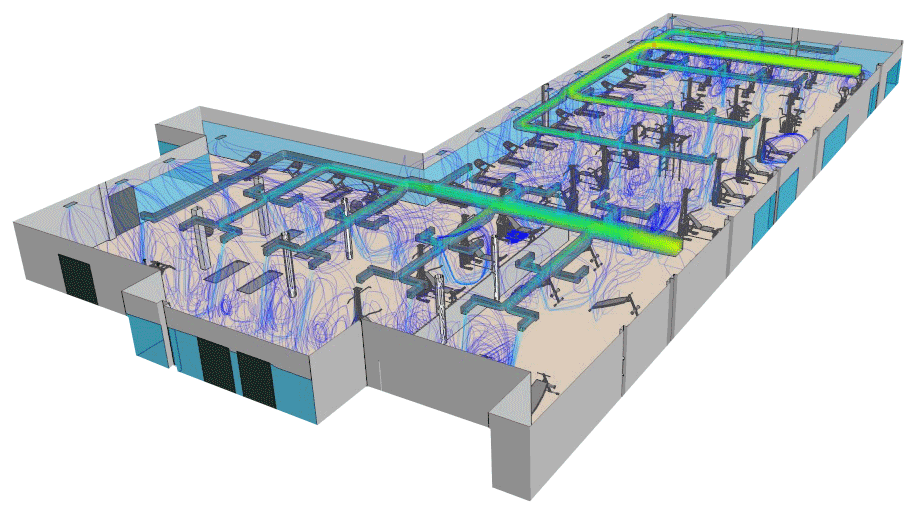
Geometric Optimization of a Biogas Reactor

La optimización geométrica de reactores de biogás es clave para garantizar una mezcla eficiente y un proceso estable.

Mediante simulación CFD, analizamos distintas configuraciones evaluando la velocidad, el tiempo de residencia, la distribución térmica y la concentración de sólidos.

Esto nos permitió identificar la geometría óptima, así como también reducir zonas muertas y maximizar el rendimiento del proceso biológico.

PROJECTS

Geometric Optimization of a Biogas Reactor

The client needed to determine the optimal geometry for a biogas reactor capable of achieving maximum mixing efficiency.

The primary design criteria were:

  • Preventing digestate velocity from falling below recommended minimum values
  • Minimizing digestate residence time within the tank
  • Reducing non-uniform distribution of organic matter
  • Preventing dead zones and sedimentation phenomena

The objective was to ensure a stable and efficient biological process while maximizing the effective reactor volume.

Slidian - Proyectos - Estudio de ventilación en una sala fitness

PROJECT SCOPE

A detailed CFD model was developed considering:

  • All reactor inlets and outlets
  • Digestate composition, including dispersed organic matter
  • Operating conditions such as inlet flow rates and temperatures

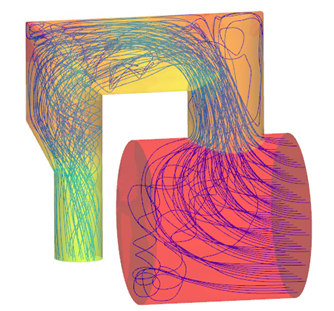
The reactor included three independent mixing circuits, each with its own injector that mixed digestate with generated biogas to enhance biological reactions.

The model therefore incorporated:

  • Different mixing system operating sequences
  • Operating times of each circuit
  • Interaction between flows
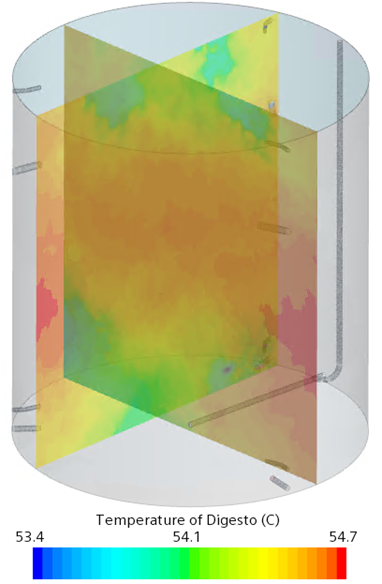
  • Thermal effects associated with mixing and biological activity

RESULTS & CONCLUSIONS

Several performance indicators were used to compare the proposed reactor geometries.

  • Digestate Velocity

The total volume where velocity exceeded the minimum recommended threshold was quantified, identifying potential stagnation zones.

  • Residence Time and Mixing Efficiency

The time required to achieve homogeneous mixing was calculated, determining which configuration provided the shortest effective mixing time.

  • Temperature Distribution

Thermal gradients were analyzed to assess heat transfer efficiency between different flow regions, a key factor for biological process stability.

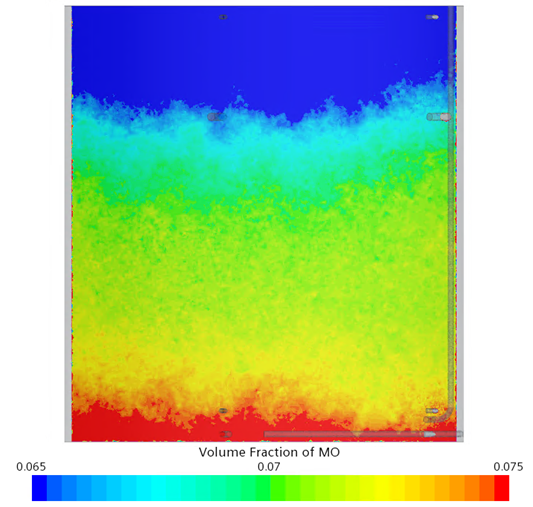
  • Organic Matter Distribution and Sedimentation Risk
    Areas with high solids accumulation and potential deposition were identified.

The analysis revealed the geometry that provided:

  • Greater active volume with adequate flow velocities
  • Shorter mixing times
  • Improved thermal homogeneity
  • Lower risk of solids accumulation and sedimentation

Thanks to CFD simulation, the reactor design was optimized before construction or modification, reducing operational risks and improving overall biogas production performance.
Contact us to discuss a customized study for your project.

Contact us

Slidian - Fluid Dynamics Lab

España
Baixada Gándara 16,
36331 Vigo
Spain
+34 886113547

USA
2500 CityWest Blvd
Houston TX 77042 
USA
+1 7136145403

hello@slidian.com


Slidian - Fluid Dynamics Lab

España
Baixada Gándara 16,
36331 Vigo
Spain
+34 886113547

hello@slidian.com

Holanda
Steur 50, 3344 JJ
Hendrik-Ido-Ambacht
Nederland
+31 78 641 4525


Una marca de

Continue reading

Hydroelectric Plant Pipeline Redesign and Discharge Jet Analysis Challenge

El rediseño de redes hidráulicas en centrales hidroeléctricas requiere garantizar eficiencia y seguridad operativa.

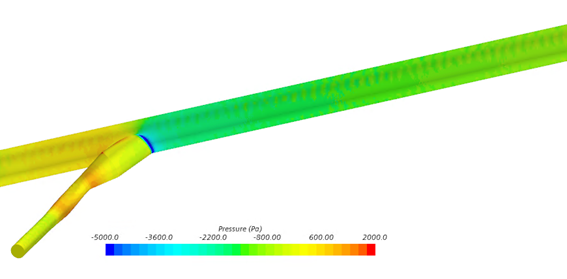
Mediante simulación CFD, optimizamos la geometría de una bifurcación y analizamos el chorro de descarga. Evaluamos las presiones,  las pérdidas de carga y las fuerzas de impacto.

Esto no permitió validar el diseño y reducir riesgos en condiciones reales de operación.

PROJECTS

Hydroelectric Plant Pipeline Redesign and Discharge Jet Analysis Challenge

The client needed to redesign part of the piping network of a hydroelectric facility to incorporate a new discharge pipeline.

The primary challenge was designing the branch connection to the existing penstock while determining:

  • The optimal connection location
  • The most efficient connection geometry

The objective was to minimize pressure losses and local overpressures while ensuring that the new line could transport the required flow rate without generating critical pressure conditions.

Additionally, the discharge jet produced by a hollow-jet valve had to be analyzed, as it would impact a nearby wall. The impact force needed to be quantified to validate the receiving structure.


Slidian - Proyectos - Estudio de ventilación en una sala fitness

PROJECT SCOPE

The project was carried out in two main phases:

  1. Branch Connection Optimization
  • Several geometric alternatives were evaluated, considering:
    • Maximum and minimum pressures
    • Local pressure losses
    • Pressure fluctuations
  • Simulations were conducted under different plant operating scenarios.
  1. Full System Modeling and Jet Analysis

After selecting the optimal branch geometry:

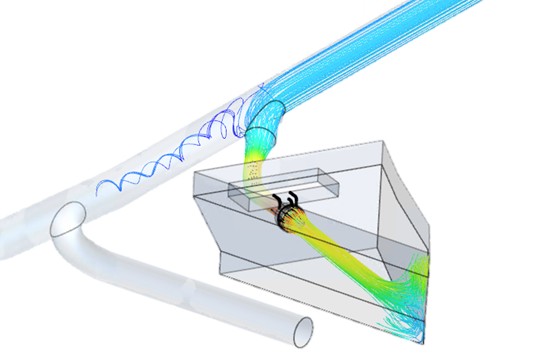
  • The complete piping system was modeled
  • The hollow-jet valve was included under real operating conditions
  • Jet velocity and impact forces on the wall were quantified
  • Velocity fields between the discharge point and impact wall were evaluated

RESULTS & CONCLUSIONS

The branch optimization phase demonstrated that:

  • Pressure peaks remained within acceptable limits
  • The selected geometry successfully transported the required discharge flow
  • The final design exhibited the lowest pressure losses among all alternatives
  • Pressure fluctuations were significantly reduced

The discharge jet analysis provided:

  • Maximum impact velocity on the wall
  • Detailed velocity distribution along the jet trajectory

Due to the high discharge velocities involved, additional improvements were proposed to reduce jet energy before impact, lowering transmitted loads and improving operational safety.

The final design delivered a hydraulically efficient, structurally safe solution tailored to real operating conditions.

Contact us to discuss a customized study for your project.

Contact

Slidian - Fluid Dynamics Lab

España
Baixada Gándara 16,
36331 Vigo
Spain
+34 886113547

USA
2500 CityWest Blvd
Houston TX 77042 
USA
+1 7136145403

hello@slidian.com


Slidian - Fluid Dynamics Lab

España
Baixada Gándara 16,
36331 Vigo
Spain
+34 886113547

hello@slidian.com

Holanda
Steur 50, 3344 JJ
Hendrik-Ido-Ambacht
Nederland
+31 78 641 4525


Una marca de

Continue reading

Wind Load Assessment for Solar Structures According to EUROCODE EN 1991-1-4

El cálculo de cargas de viento en estructuras solares requiere métodos precisos que superen las limitaciones de los enfoques analíticos tradicionales.

Mediante simulación CFD, evaluamos las fuerzas y momentos aerodinámicos en base a la norma EUROCODE EN-1991-1-4.

Obtuvimos un dimensionamiento estructural más realista, optimizando la seguridad y reduciendo sobredimensionamientos en configuraciones reales de plantas fotovoltaicas.

PROJECTS

Wind Load Assessment for Solar Structures According to EUROCODE EN 1991-1-4

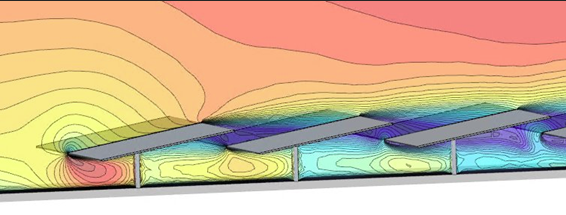
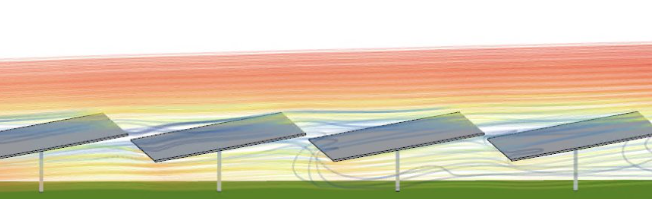
The client required a detailed assessment of wind loads acting on solar support structures in compliance with EUROCODE EN 1991-1-4.

Although the standard provides analytical calculation procedures, these are primarily intended for generic and relatively simple structures. For solar installations, which involve complex geometries and significant panel-to-panel interactions, analytical methods may be overly conservative or fail to accurately represent real behavior.

CFD simulations were therefore used to obtain more realistic aerodynamic forces and moments, allowing more accurate sizing of structural and mechanical components.


Slidian - Proyectos - Estudio de ventilación en una sala fitness

PROJECT SCOPE

The study included:

  • Isolated Panel Analysis
    Evaluation of multiple wind directions acting on a single solar panel, including:
    • Aerodynamic drag and lift forces
    • Moments acting on panels and supporting structures
  • Full Solar Array Simulation
    Simulation of the complete solar farm layout to:
    • Assess panel-to-panel interaction effects
    • Evaluate shielding effects between rows
    • Compare loads on perimeter panels, particularly corner panels, with loads on interior panels

This approach captured aerodynamic phenomena that cannot be represented through simplified analytical models.

RESULTS & CONCLUSIONS

Wind direction analysis showed that:

  • Northern winds generated the highest loads for the case studied
  • Southern winds produced lower loads due to the geometry and orientation of the array

Significant differences were also identified between:

  • Front-row panels, which experienced the highest aerodynamic loads due to direct exposure
  • Central rows, where shielding effects reduced wind loads

The relationship between drag and lift forces was also evaluated:

  • For northern and crosswinds, lift forces dominated
  • For southern winds, drag forces exceeded lift forces

This study enabled a more realistic structural design, improving safety while avoiding unnecessary oversizing and remaining fully aligned with EUROCODE EN 1991-1-4 requirements.

Contact us to discuss a customized study for your project.

Contact us

Slidian - Fluid Dynamics Lab

España
Baixada Gándara 16,
36331 Vigo
Spain
+34 886113547

Holanda
Steur 50, 3344 JJ
Hendrik-Ido-Ambacht
Nederland
+31 78 641 4525

hello@slidian.com


Slidian - Fluid Dynamics Lab

España
Baixada Gándara 16,
36331 Vigo
Spain
+34 886113547

hello@slidian.com

Holanda
Steur 50, 3344 JJ
Hendrik-Ido-Ambacht
Nederland
+31 78 641 4525


Una marca de
Continue reading

Optimization of a Water Cooling Pipeline

La optimización hidráulica de sistemas de refrigeración es clave para reducir consumos energéticos y mejorar el rendimiento operativo.

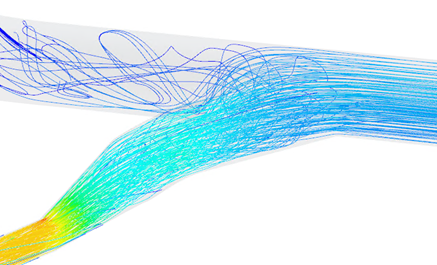
Mediante simulación CFD, analizamos un tramo de tubería que tenía cambios de dirección y reducción de sección. Identificamos pérdidas de carga significativas.

Tras evaluar distintas soluciones de rediseño, logramos finalmente una reducción de hasta un 22% en la pérdida de carga.

PROJECTS

Optimization of a Water Cooling Pipeline

The client needed to analyze a specific section of a water cooling system that included two mitered bends and a pipe diameter reduction.

This geometry was suspected of generating significant pressure losses, negatively affecting overall system performance and increasing energy consumption.


Slidian - Proyectos - Estudio de ventilación en una sala fitness

PROJECT SCOPE

The project was divided into two main phases:

  • CFD Analysis of the Existing Design
    Objectives included:
    • Quantifying pressure losses within the section
    • Evaluating its overall impact on system performance
    • Identifying flow separation and turbulence caused by abrupt directional and sectional changes
  • Evaluation of Alternative Designs
    Several redesign concepts were developed and compared to reduce pressure losses and improve hydraulic performance.

RESULTS & CONCLUSIONS

The CFD analysis confirmed that the original configuration generated substantial pressure losses due to:

  • Sharp directional changes at the mitered bends
  • Flow separation and recirculation zones
  • Additional losses caused by the section reduction

Two improvement solutions were proposed:

  1. Installation of internal flow deflectors within the mitered bends to guide the flow and reduce separation.
  2. Replacement of mitered bends with curved elbows to smooth directional changes and reduce local pressure losses.

After comparing all three configurations, the solution incorporating internal deflectors delivered the best performance, reducing pressure losses by 22% compared to the original design.

This study demonstrates how CFD simulations can optimize hydraulic components with high accuracy, reducing energy losses and improving overall system efficiency without requiring extensive modifications.


Contact us to discuss a customized study for your project.

Contact us

Slidian - Fluid Dynamics Lab

España
Baixada Gándara 16,
36331 Vigo
Spain
+34 886113547

Holanda
Steur 50, 3344 JJ
Hendrik-Ido-Ambacht
Nederland
+31 78 641 4525

hello@slidian.com


Slidian - Fluid Dynamics Lab

España
Baixada Gándara 16,
36331 Vigo
Spain
+34 886113547

hello@slidian.com

Holanda
Steur 50, 3344 JJ
Hendrik-Ido-Ambacht
Nederland
+31 78 641 4525


Una marca de
Continue reading

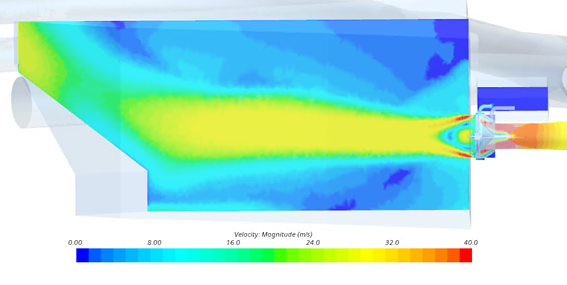
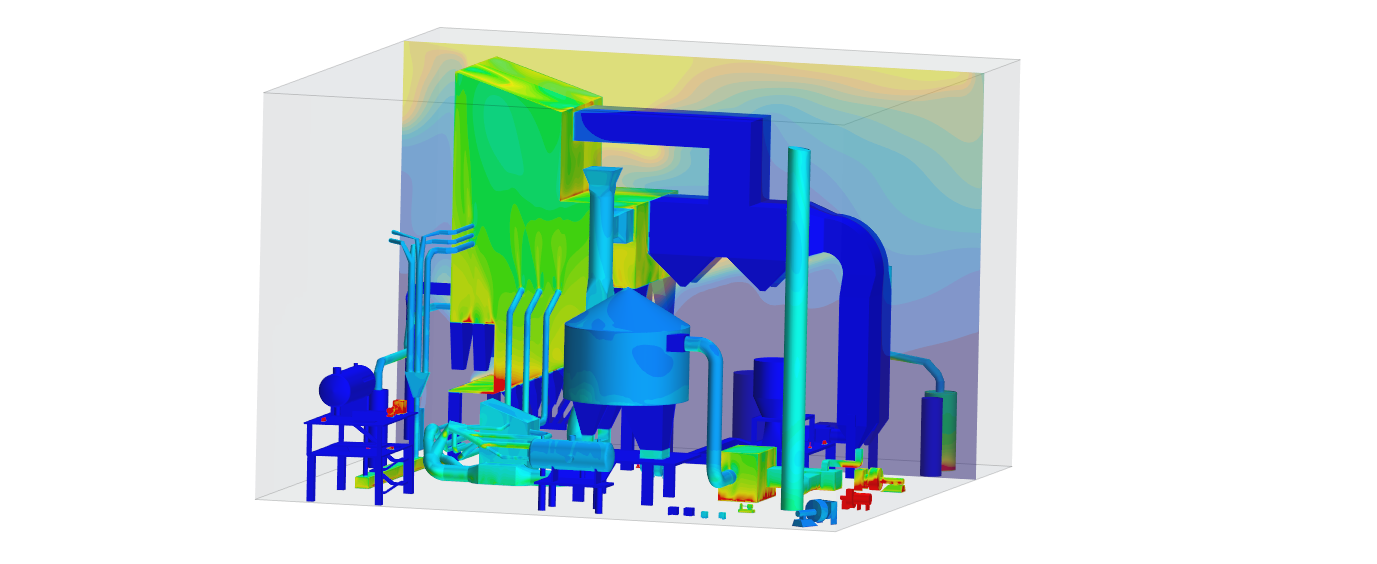
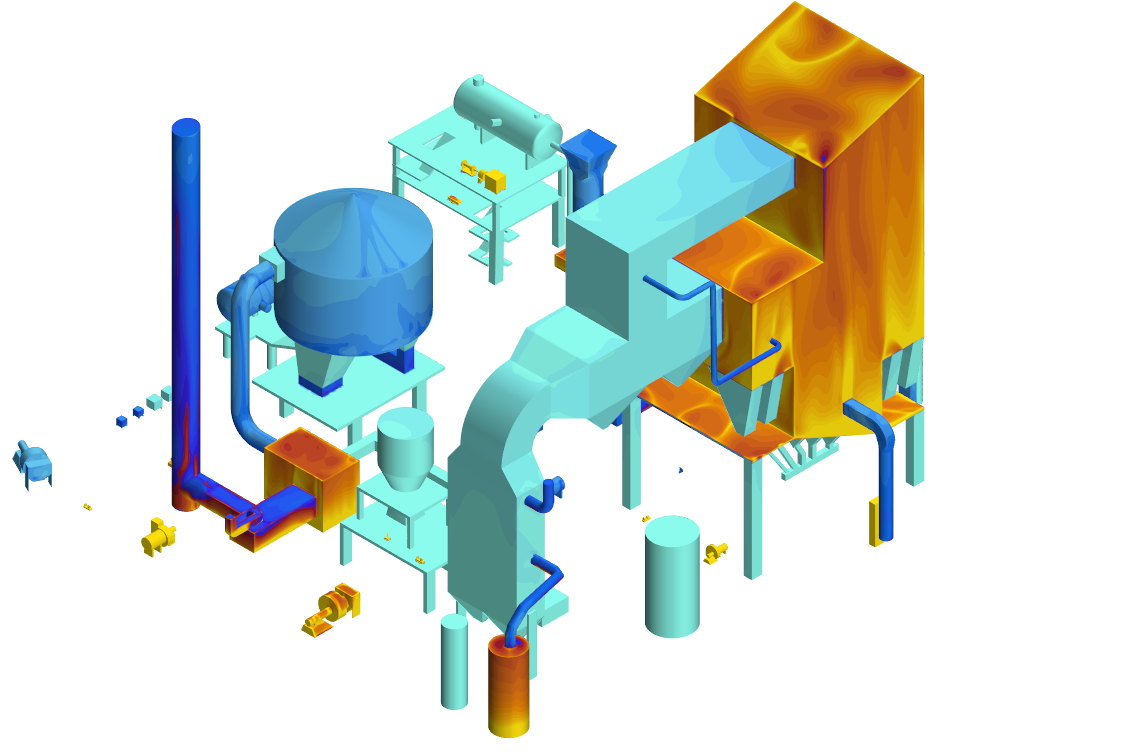
Thermal Dissipation Analysis in a Waste-to-Energy Plant Challenge

El diseño del sistema de ventilación de una planta Waste to Energy requiere garantizar condiciones térmicas seguras, debido a que cuenta con una sala con alta disipación de calor.

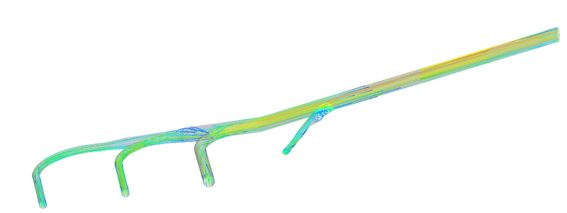
Mediante simulación CFD, optimizamos la ventilación natural y forzada. De este modo aseguramos el control de temperatura, la eficiencia energética y el cumplimiento normativo incluso en los escenarios operativos más exigentes.

PROJECTS

Thermal Dissipation Analysis in a Waste-to-Energy Plant
Challenge

The client needed to design and size the ventilation system for a room within a Waste-to-Energy facility.

This room contained numerous pieces of equipment that generated significant thermal loads, making compliance with temperature limits established by regulations particularly challenging.

The primary objective was to maintain temperatures within an acceptable range under both normal operating conditions and worstcase scenarios.


Slidian - Proyectos - Estudio de ventilación en una sala fitness

PROJECT SCOPE

The project included:

  • Ventilation System Sizing
    Evaluation of:
    • Vent size requirements for natural ventilation
    • Fan selection and sizing for forced ventilation
    • Fresh air flow rates required to ensure adequate heat dissipation
  • Airflow Optimization

    Optimization of air inlet and outlet locations to maximize air renewal while minimizing energy consumption.

The goal was to define a technically robust solution capable of maintaining temperatures within regulatory limits while ensuring operational efficiency and reliability.

RESULTS & CONCLUSIONS

CFD simulations enabled accurate design and sizing of both natural and forced ventilation systems, optimizing heat removal within a high-temperature enclosed environment.

The study began with a baseline simulation under the most demanding thermal load conditions. The following parameters were analyzed:

  • Temperature distribution throughout the room
  • Air velocity fields
  • Flow dynamics generated by the initial ventilation configuration

Based on these results, an iterative optimization process was carried out, including:

  • Redesign of air inlet and outlet locations
  • Adjustment of ventilation flow rates
  • Comparison of alternative natural and forced ventilation configurations.

Once the optimal solution was achieved, multiple operating and environmental scenarios were evaluated to validate system performance under real-world conditions.

The final solution proved to be technically robust, energy-efficient, and fully compliant with temperature requirements, ensuring adequate heat dissipation even under the most unfavorable operating conditions.

Contact us to discuss a customized study for your project.

Contact us

Slidian - Fluid Dynamics Lab

España
Baixada Gándara 16,
36331 Vigo
Spain
+34 886113547

Holanda
Steur 50, 3344 JJ
Hendrik-Ido-Ambacht
Nederland
+31 78 641 4525

hello@slidian.com


Slidian - Fluid Dynamics Lab

España
Baixada Gándara 16,
36331 Vigo
Spain
+34 886113547

hello@slidian.com

Holanda
Steur 50, 3344 JJ
Hendrik-Ido-Ambacht
Nederland
+31 78 641 4525


Una marca de
Continue reading

Ventilation Assessment for a Fitness Room

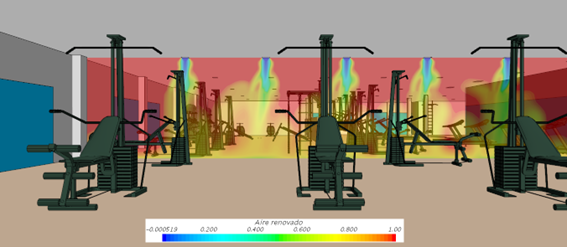
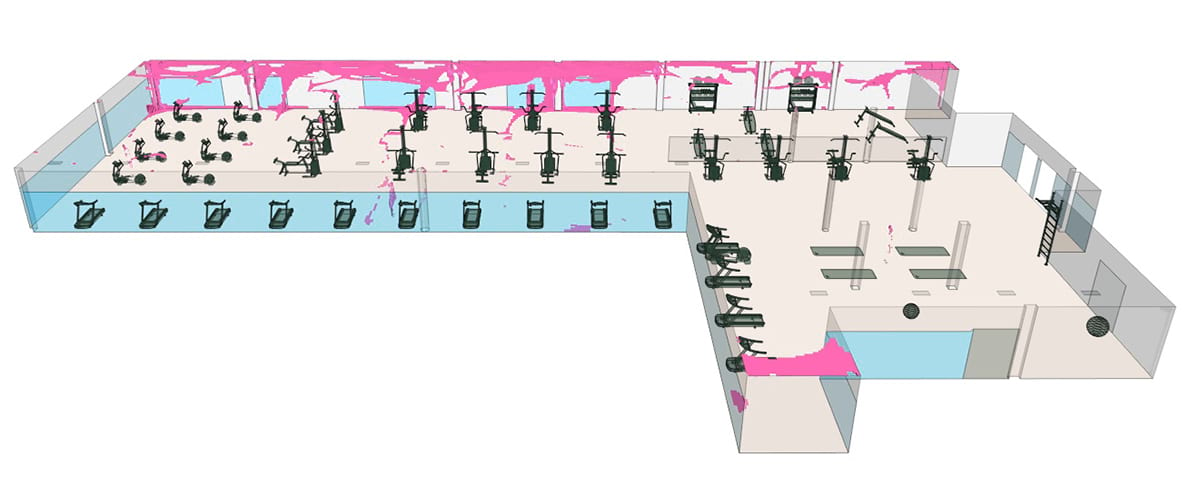
Análisis de la ventilación en la sala fitness del centro Mais Que Auga Navia, a fin de evaluar la idoneidad del sistema de ventilación forzada existente y las prácticas de uso de este, evaluando si procede las mejoras aplicables.

El trabajo incluye mediciones en dicha sala y el desarrollo de un modelo virtual completo de este espacio, analizando mediante simulación CFD diferentes escenarios de uso.

PROJECTS

Ventilation Assessment for a Fitness Room

Client: MQA Navia

The client required an assessment of indoor air quality and CO₂ dispersion within the fitness area of a gym. This enclosed space had high occupancy levels and significant ventilation demands. The objective was to verify whether the existing air renewal system was adequate and to identify potential areas with elevated CO₂ concentrations.


Slidian - Proyectos - Estudio de ventilación en una sala fitness

PROJECT SCOPE

The project was developed in two main phases:

·         HVAC Duct Network Analysis:

The airflow distribution within the HVAC system was analyzed to identify areas with excessive pressure losses and potential flow imbalances.

·         Indoor Airflow Analysis:

CFD simulations were used to evaluate airflow distribution throughout the room, identifying areas with poor air renewal and increased CO₂ concentrations.

RESULTS & CONCLUSIONS

The HVAC duct analysis revealed recirculation zones and significant pressure drops, causing imbalances in system regulation. Since the installation was already operational, modifying the duct layout or replacing high-loss sections was complex and impractical.

As a solution, local restrictions were introduced at supply outlets to adjust the required airflow rates in each area. CFD simulations made it possible to determine the exact level of adjustment required for each diffuser, eliminating costly trial-and-error interventions.

Additionally, a detailed analysis of CO₂ concentrations (ppm) and air changes per hour identified areas with inadequate ventilation. Based on these findings, diffuser settings were adjusted to increase fresh air supply in the most critical zones, resulting in a more uniform airflow distribution and a significant improvement in indoor air quality.

Slidian - Proyectos - Estudio de ventilación en una sala fitness

Contact us to discuss a customized study for your project.

Contact us

Slidian - Fluid Dynamics Lab

España
Baixada Gándara 16,
36331 Vigo
Spain
+34 886113547

Holanda
Steur 50, 3344 JJ
Hendrik-Ido-Ambacht
Nederland
+31 78 641 4525

hello@slidian.com


Slidian - Fluid Dynamics Lab

España
Baixada Gándara 16,
36331 Vigo
Spain
+34 886113547

hello@slidian.com

Holanda
Steur 50, 3344 JJ
Hendrik-Ido-Ambacht
Nederland
+31 78 641 4525


Una marca de
Continue reading

Privacy Overview

This website uses cookies so that we can provide you with the best user experience possible. Cookie information is stored in your browser and performs functions such as recognising you when you return to our website and helping our team to understand which sections of the website you find most interesting and useful.